
A sky filled with green curtains can look like a special effect. On a smaller scale, an ordinary fallen branch can sprout what appears to be a delicate head of white hair. Both are real, and their explanations are worth a closer look.
These ten phenomena range from eruptions that reveal heat beneath the ground to clouds illuminated long after the landscape below has darkened. Others leave physical evidence that seems to belong in a mystery story.
How we ranked them: This is a subjective editorial list, with the greatest weight given to visual surprise and an explanation that changes how you understand the scene. We chose a mix of geological and atmospheric processes, including one shaped by fungal activity. The order is not a scientific measure of rarity or importance. The explanations draw on the research and institutional sources linked below.
1. Auroras
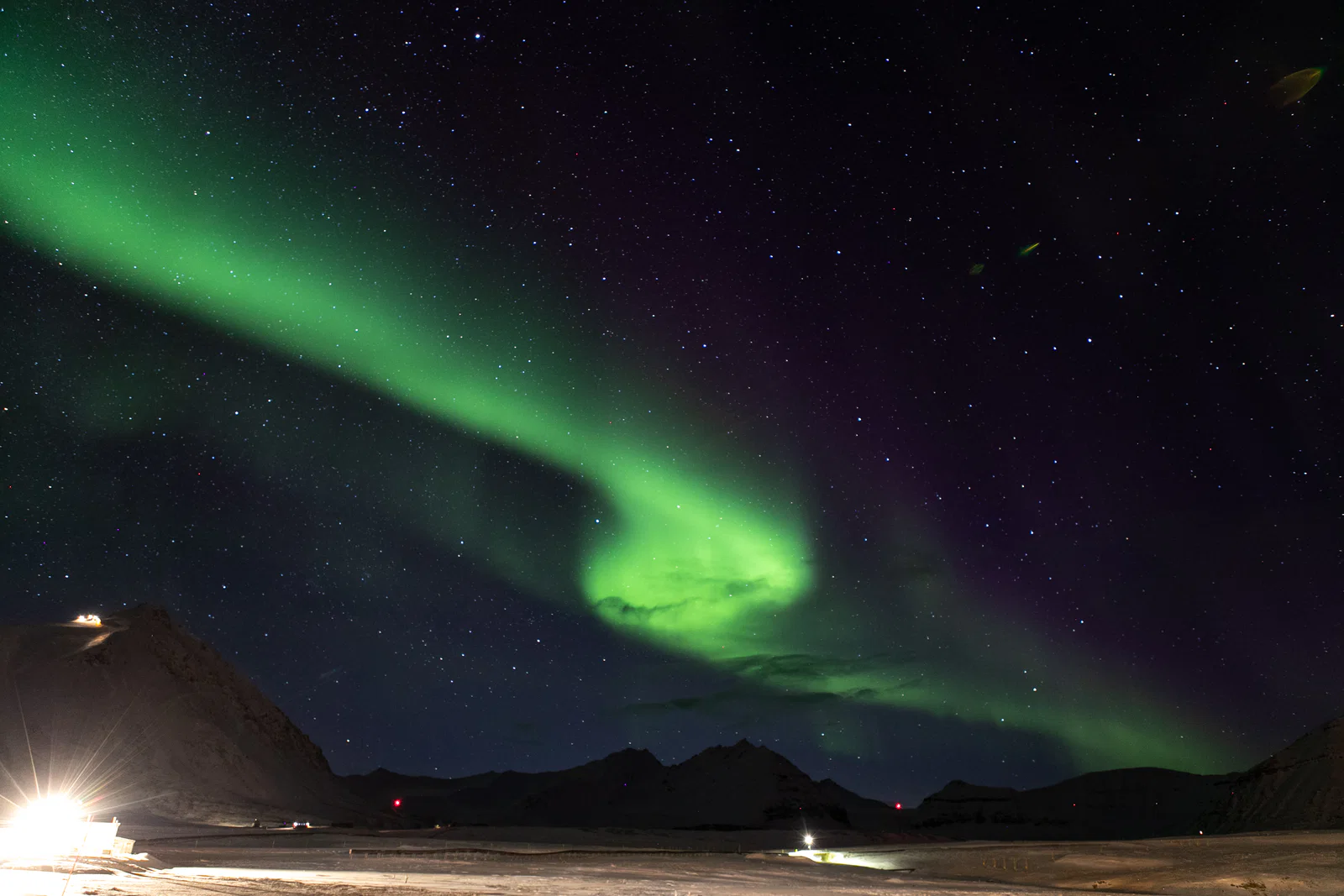
Photo: NASA/Joy Ng; NASA’s Goddard Space Flight Center. Used under NASA media-use guidance. Resized and compressed.
Auroras can stretch into curtains, ripple across the sky or gather into a broad colored glow. Their scale is part of the surprise: a whole patch of sky appears to be in motion.
The underlying process begins with energetic particles colliding with gases in the upper atmosphere. Those interactions give atoms and molecules extra energy, which they can release as light. Different gases and conditions produce different colors; oxygen, for example, can produce the familiar green as well as red. NASA’s guide to auroras
There is an important photographic catch. A camera can show stronger colors and more detail than a person sees, especially during faint displays away from polar regions. That does not make the photograph fake, but it does make “this is exactly what you’ll see” a poor promise. NASA’s note on observing night lights
2. Geyser eruptions
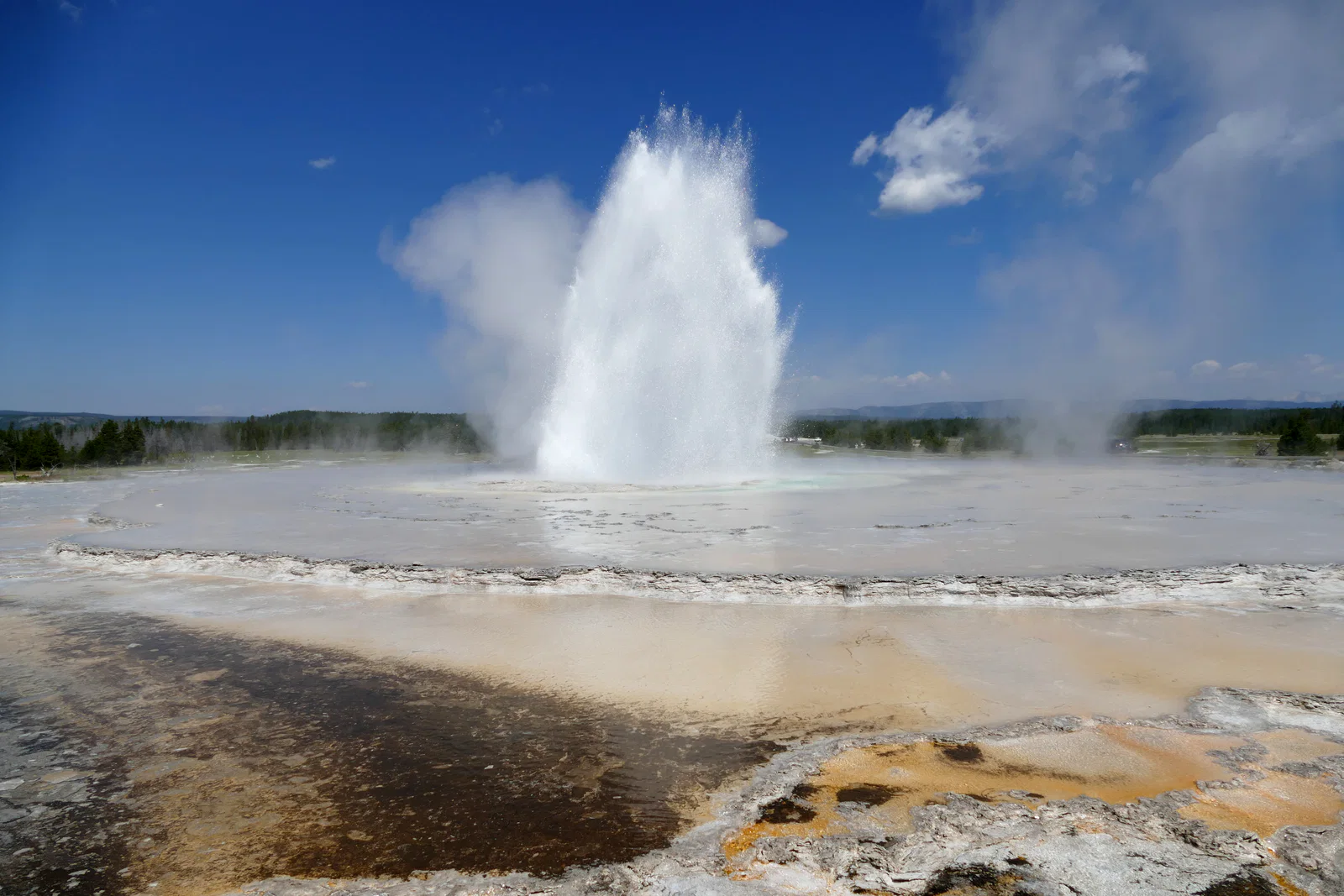
Photo: Diane Renkin / National Park Service, via USGS. Public domain. Resized and compressed.
A geyser turns the ground into a fountain, sending water and steam into the air. The sudden movement is striking, but much of the explanation lies out of sight.
Hot water accumulates in an underground reservoir connected to a narrow passage. As boiling water begins to escape, pressure falls. More water then becomes a mixture of steam and liquid, driving the eruption through the constricted opening. Changes in that hidden plumbing can alter the timing and behavior of eruptions. USGS’s explanation of Yellowstone’s hydrothermal system
Some geysers erupt at fairly regular intervals; others are much less predictable. That gives the spectacle its second layer of interest: what looks like a simple burst of water is the visible outcome of a changing system underground.
3. Sailing stones
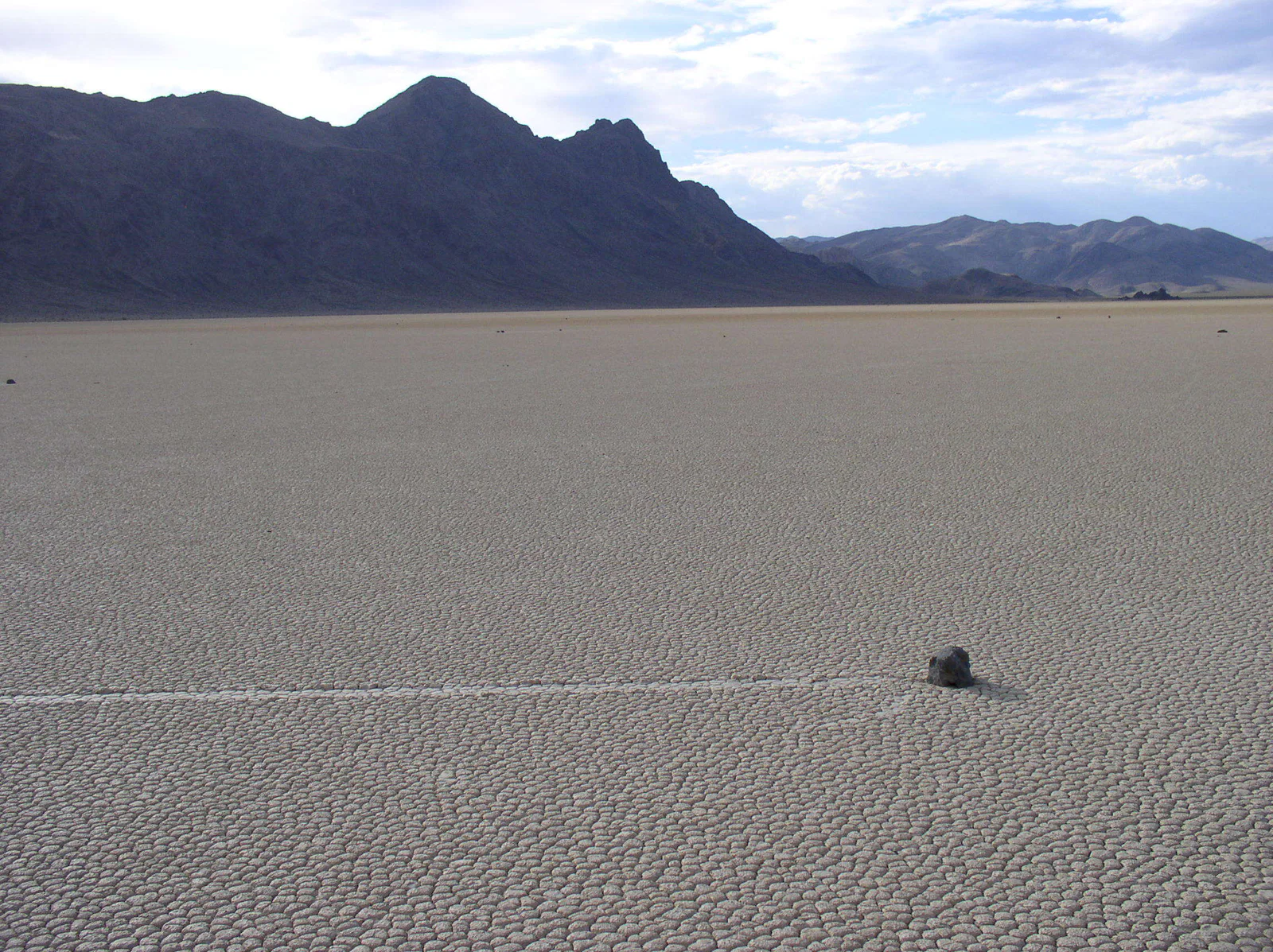
Photo: NPS. Public domain: Full Granting Rights. Resized and compressed.
A rock sits on a dry lakebed with a long track behind it. There are no wheels and no obvious source of movement. At Racetrack Playa in Death Valley, the aftermath is often more puzzling than the action itself.
Researchers directly observed moving stones in 2013 and reported the findings in 2014. Under the conditions they documented, a shallow pond froze into thin sheets. As the ice broke into floating panels, light winds pushed it across the water, shoving stones along the muddy bottom and leaving trails. Scripps’ account of the observations
The satisfying twist is how modest the ingredients were. The observed movement did not need hurricane-force wind or rocks levitating over the surface. It needed water, a thin layer of ice and the right timing. The dry tracks preserve a scene whose most important participant has melted away.
4. Volcanic lightning
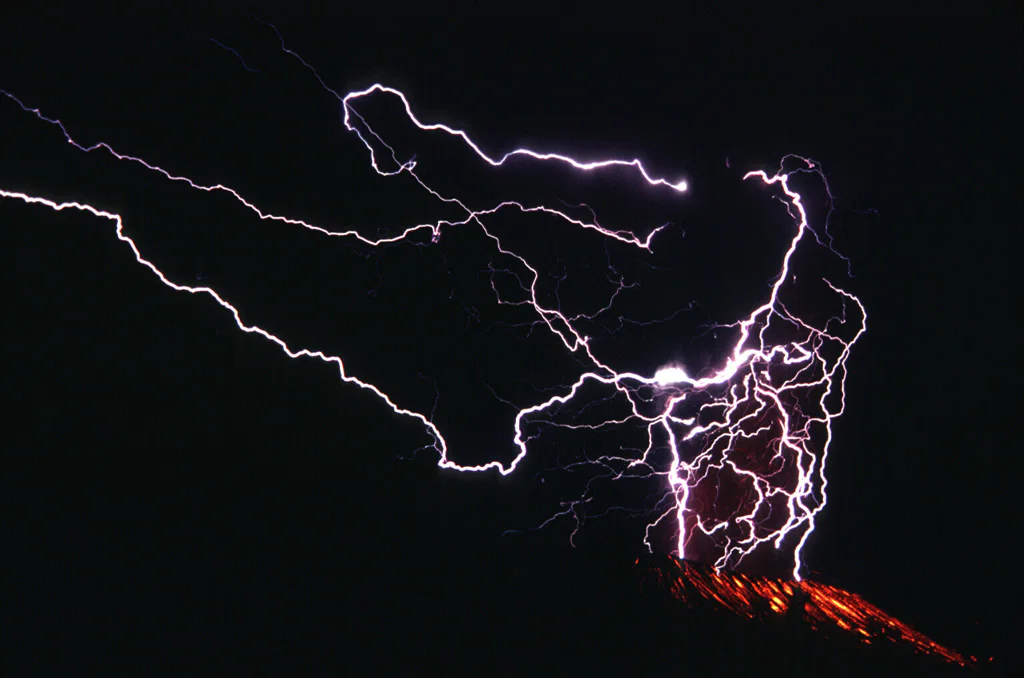
Photo: Jack Lockwood / U.S. Geological Survey, via Smithsonian Global Volcanism Program. Public domain. Compressed.
An erupting volcano already looks dramatic. Add lightning within its plume, and the scene can seem almost overproduced.
The flashes are real electrical discharges. Collisions involving volcanic particles can separate charge; in some plumes, interactions involving ice also become important. There is no single simple recipe that explains every eruption. USGS overview of lightning in volcanic ash plumes
A study of Alaska’s Bogoslof eruption found evidence that ice-related charging helped generate lightning in the higher, colder plume, while collisions among volcanic particles likely mattered nearer the vent. The researchers treated those contributions as a continuum, not competing all-or-nothing explanations. USGS research on Bogoslof’s lightning
That earns this phenomenon a high place: the same eruption can bring together intensely hot material and processes associated with icy thunderclouds. It is a spectacle for verified footage and safely made photographs, not a reason to approach an eruption.
5. Columnar basalt
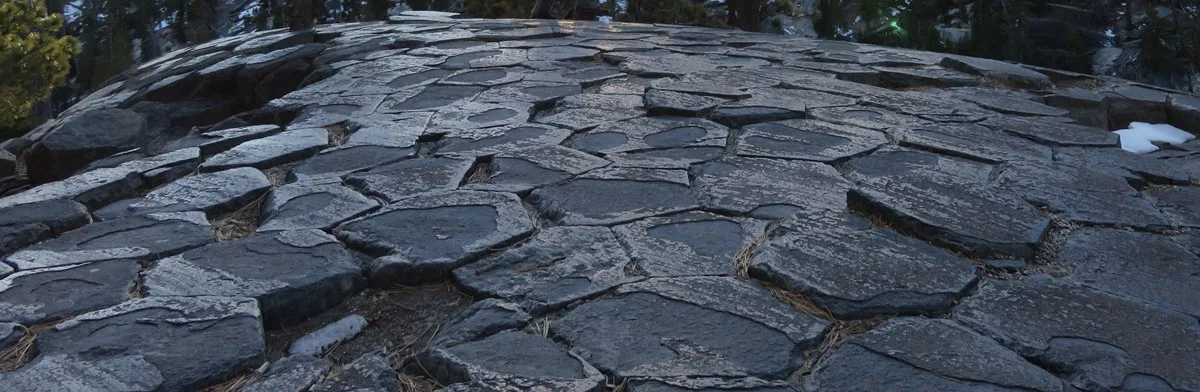
Photo: National Park Service. U.S. Government work; no claim to original U.S. Government works. Compressed.
At places such as California’s Devils Postpile, rock can look as though it was cut into tightly packed architectural columns. Viewed from above, the ends resemble an irregular tiled floor.
The pattern forms as hot rock cools and contracts. Cracks develop and propagate through the rock, dividing it into columns. Many have six sides, but nature does not enforce a perfect honeycomb: columns can have other numbers of sides, and they need not all stand straight. Columnar jointing is especially associated with basalt, though it also occurs in other volcanic rocks. National Park Service guide to columnar jointing
The most useful detail to look for is the variation. Uneven polygons and curved columns make the scene more interesting than a wall of identical hexagons. What resembles deliberate construction is a record of cooling and fracture.
6. Blood Falls
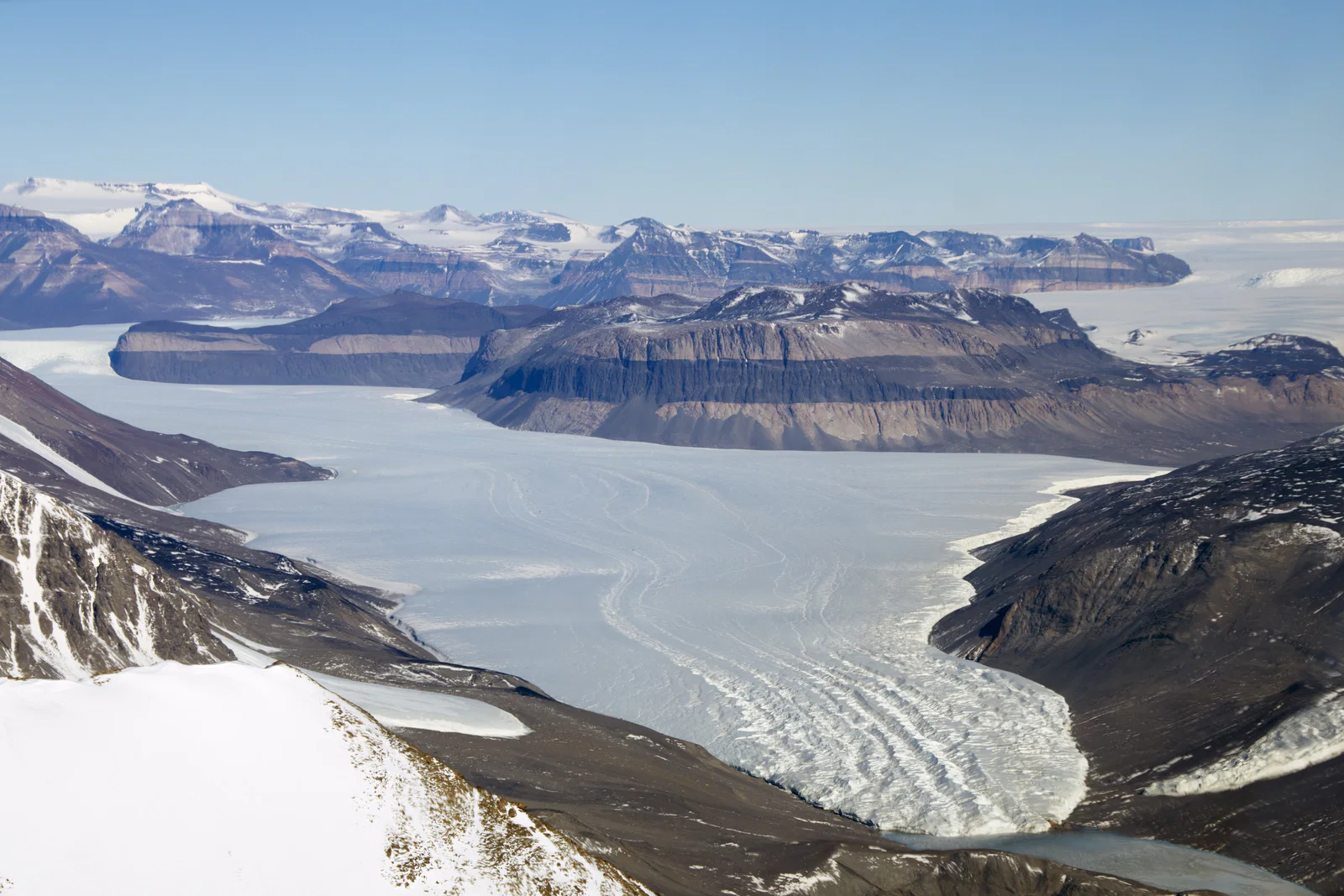
Photo: NASA/Michael Studinger, Operation IceBridge. Used under NASA media-use guidance. Resized and compressed; full frame retained.
At the end of Antarctica’s Taylor Glacier, a rusty red-orange stain spreads across an otherwise icy landscape. The name “Blood Falls” supplies the horror-film interpretation before you have time to invent one yourself.
The outflow is salty water from beneath the glacier. Research published in 2022 linked the color to dissolved iron oxidizing when the water reaches the air and forming tiny, non-crystalline, iron-containing particles. Other elements in those particles can also influence the color. The Blood Falls materials study
Johns Hopkins’ account describes the microscope work that revealed these minute particles. The explanation is more specific than simply calling the falls “red water” or blaming red algae. Johns Hopkins on the iron-rich nanospheres
The contrast is what makes it memorable: a strikingly colored surface feature is evidence of water and chemistry hidden beneath the ice.
7. Lenticular clouds
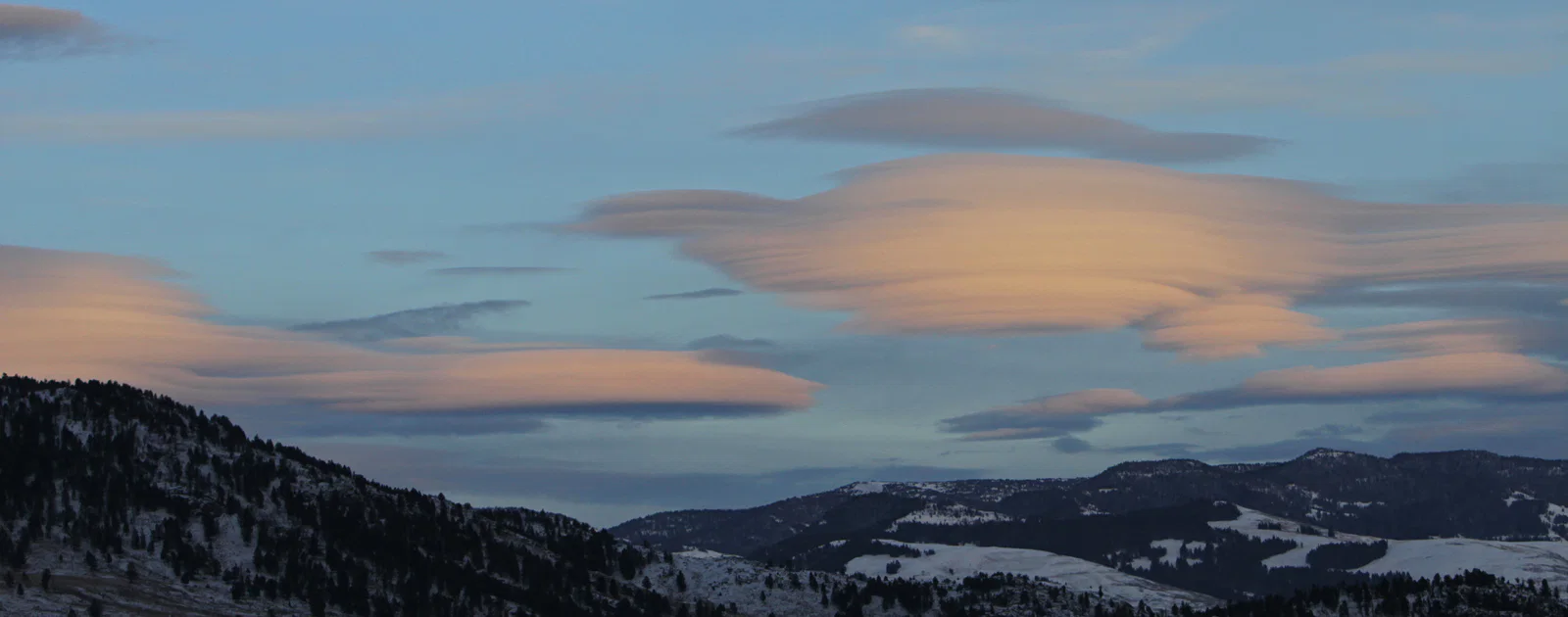
Photo: NPS/Jim Peaco. Public domain: Full Granting Rights. Resized and compressed.
Lenticular clouds have the neat, lens-like outlines that science fiction taught us to associate with flying saucers. Their smooth edges can look oddly deliberate beside an ordinary ragged cloud bank.
They can form when air flowing over hills or mountains sets up standing waves downwind. Where moist air rises in a wave and cools enough, water vapor condenses into cloud. The cloud’s shape makes an otherwise invisible pattern of moving air visible. Met Office explanation of lenticular clouds
That is the best part of the effect: the mountain is influencing the air beyond its own slopes. A distinctive cloud becomes a clue to the larger flow around it. The shape may look calm and orderly, but mountain waves can be associated with turbulence; this is an explanation of the view, not a guide to flying through it.
8. Hair ice

Photo: Youbadou / Wikimedia Commons, CC BY-SA 4.0. Converted and compressed; image derivative retains the same license.

On some damp, decaying wood, ice grows in fine white strands that resemble soft hair. It is easy to mistake the result for something biological. In an indirect way, that instinct is useful.
A 2015 study investigated the role of the fungus Exidiopsis effusa. The researchers found it in all the hair-ice-producing wood samples they examined. Their work showed that freezing water produces the ice, while fungal activity helps it retain its unusually fine shape rather than becoming a crust. The exact substances that stabilize the strands still needed further investigation. The hair-ice study in Biogeosciences
This is the list’s smallest-scale spectacle. You do not need a whole sky or a volcanic landscape for nature to look unfamiliar; sometimes the remarkable detail is growing on the surface of a fallen branch.
9. Noctilucent clouds
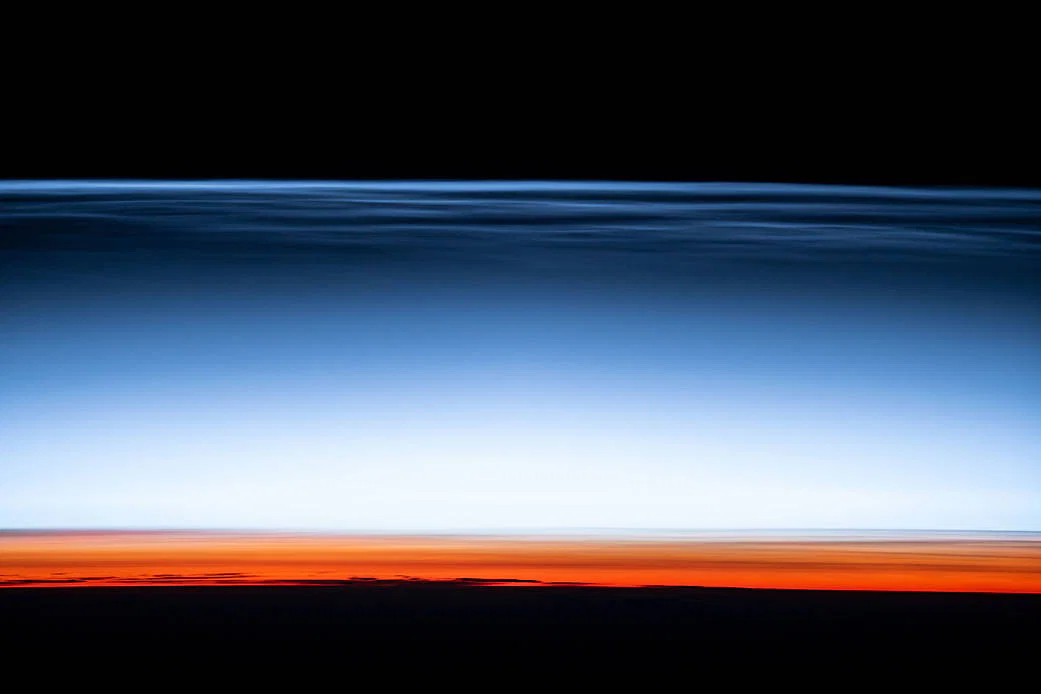
Photo: NASA, image ISS062-E-005412. Used under NASA media-use guidance. Converted and compressed; no upscaling.
Thin blue wisps can remain bright while the ground below is dark. Noctilucent means “night shining,” a fitting name for clouds whose position allows them to catch sunlight beyond the reach of lower clouds.
These clouds form roughly 76 to 85 kilometers above Earth’s surface, near the boundary between the mesosphere and thermosphere. Water vapor freezes into ice crystals there. Around twilight, the Sun can illuminate those high crystals even while it is below the observer’s horizon. NASA’s explanation of noctilucent clouds
The photograph here offers an orbital view: delicate bands sit above the orange edge of the atmosphere. Their apparent glow comes from sunlight. A change in viewpoint makes the enormous vertical separation between the clouds and the landscape easier to appreciate.
10. Sun pillars
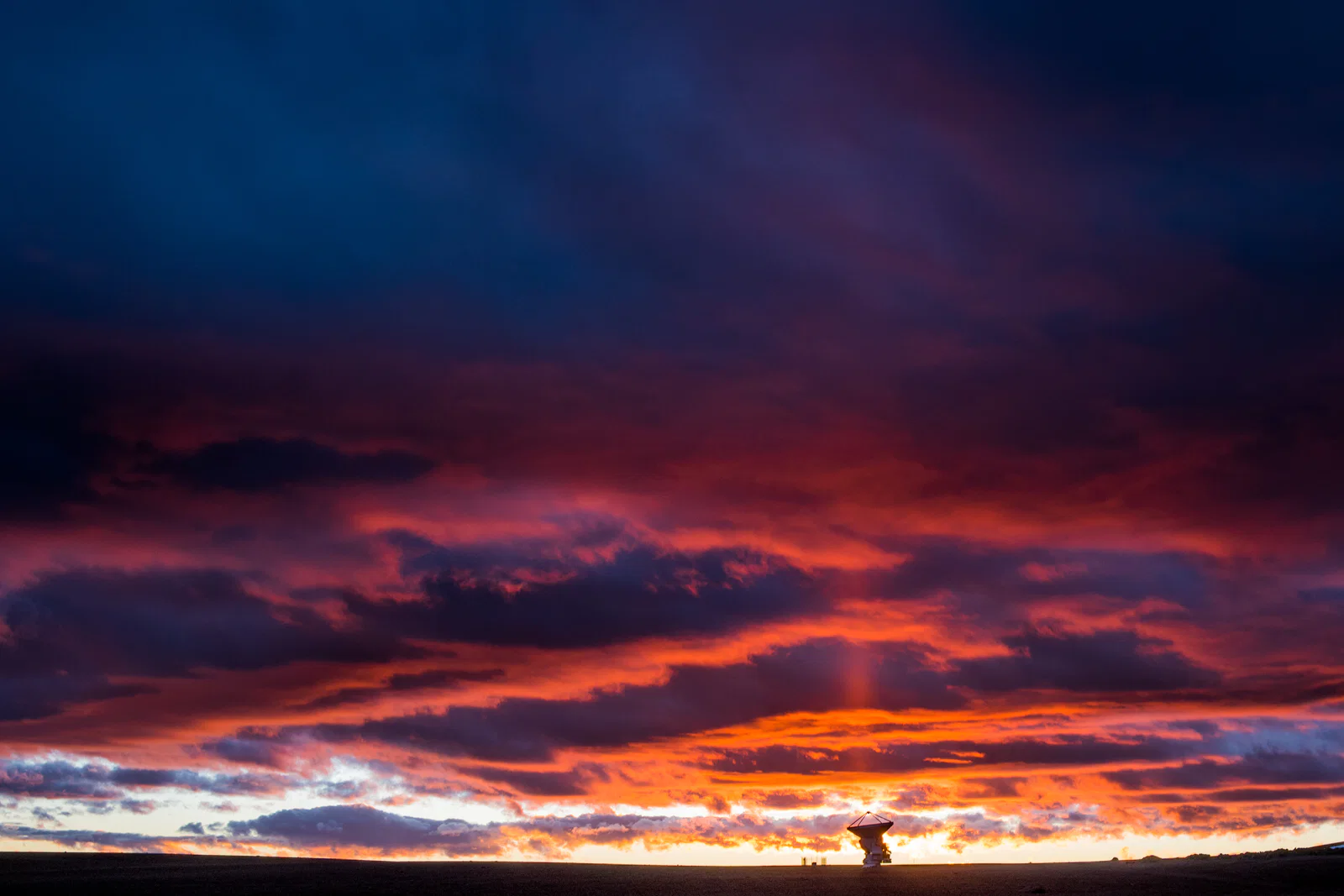
Photo: C. Duran / ESO, CC BY 4.0. Resized and compressed.
A sun pillar resembles a vertical shaft of light rising from a low Sun, especially around sunrise or sunset. In a photograph, it can look as if a narrow beam has been switched on behind the horizon.
The effect is produced by sunlight reflecting from ice crystals falling through the air. The apparent column is assembled from those reflections; it is not a solid luminous structure hanging in the sky. National Weather Service guide to sun pillars
It closes the list because the ingredients are so spare. The same sunlight that gives an ordinary sunset its glow can acquire an entirely different shape when the air contains the right little reflectors. As with any sun-related optical display, do not look directly at the Sun to try to find it.
The detail worth keeping
The first reaction to an unusual photograph is often “is that real?” A better second question is “what, exactly, am I seeing?” Identifying the process can reveal hidden heat, shifting ice or sunlight meeting crystals high above the ground. The explanation leaves plenty of room for wonder.
Original research checked October 26, 2026; replacement entries and their photographs checked October 27, 2026. This is a science explainer, not a forecast or travel guide. Photograph captions identify their actual subjects; brightness and color in photographs may differ from unaided viewing.